
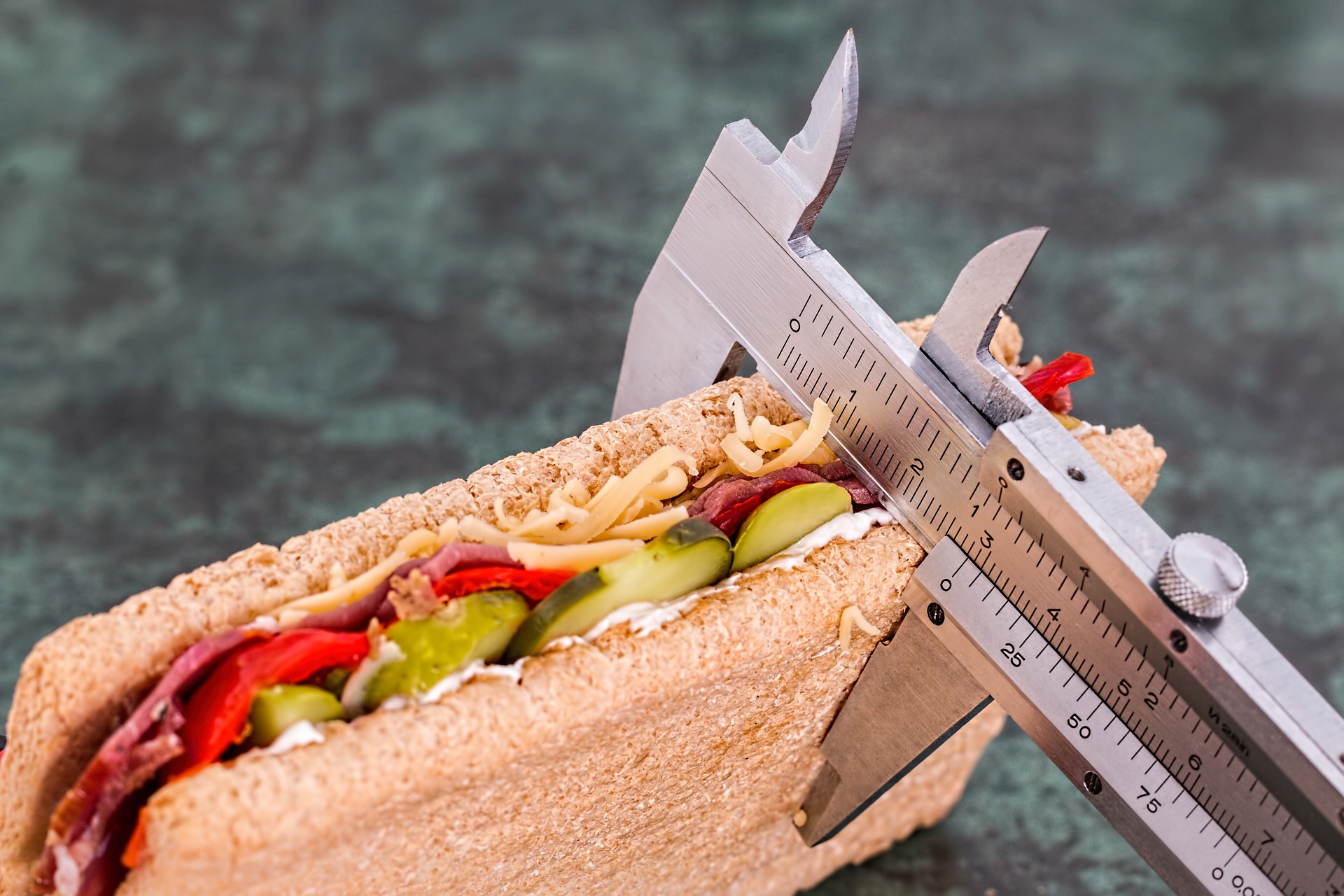
Let’s talk about the truth and misconceptions about calories? Is counting calories the most effective way to maintain or lose weight? Are all calories created equal?
Many individuals count calories for the purpose of weight loss or weight maintenance. People may read labels or menus, study numbers and calculate their calorie intake. People may feel guilty when exceeding certain numbers set in mind and then skipping meals or over exercising to balance it all.
Health Canada estimates that a 31-50 year old male should consume from 2350-2900 calories a day depending on their activity level, and a female of the same age should consume from 1800 to 2250 calories.
What is a calorie?
diet final2
Calories are the amount of energy in food that we get from what we eat and drink, to allow a body to function and complete necessary activities. Nutrients that provide calories are carbohydrates, protein, and lipids.
According to the Atwater system developed for assessing energy content of foods over a 100 years ago, it became a common and convenient practice to state that carbohydrates and protein produce 4 calories per 1 gram each and 1 gram of fat produces 9 calories.

It could be important to know the approximate energy content in the main foods and ingredients we consume, such as knowing that an apple has less calories than a piece of cake, or that a handful of almonds equals in calories to a package of gummy bears. While these numbers appear to be a clear guideline to assist in dietary approach, there are several problems with the calorie count. Let’s tackle these the notion “Are all calories created equal?

Meat is high in calories; but high in nutrition as well.
Mistake #1 It is difficult to know exactly how many calories one’s body needs.
On a side note, Health Canada indicates that the above recommendations are quite approximate and there are several factors that could affect it, such as genetics, body size and body composition, as well as that these general recommendations would not fit those women who are pregnant or breastfeeding.
Due to the difficulties in calculating one’s metabolic rate and various digestive parameters, it is hard to know what is the exact number of calories one’s body needs or actually absorbs daily. Two different people do not digest the same foods and utilize the calories in the same way. Therefore, it is like a blind game trying to guess a digit and follow certain numbers versus listening to your body on what it really needs.

Not all calories are created equal.
Mistake #2 People Cannot calculate correctly
A British study in 2016 indicated that people widely under and overestimate their caloric input and output from meal consumption or exercising. Inaccurate estimation errors range from 760 kcal underestimation to 468 kcal overestimation. Based on this study, less than a quarter of participants were able to estimate calories in food with an error of less than 15%. The difference in motivation was also highlighted as errors in calorie estimation may be greater in overweight adults who are not attempting weight loss.
In addition, many people inaccurately estimate their nutrition intake by not paying attention to the cooking process. Richard Wrangham, the chair of biological anthropology at Harvard University, pointed out that eating cooked or processed food provides more calories than eating the same food raw.
While discussing the Atwater system, Wrangham explained that the heating process leads to protein denaturation (change), and, as a result, they get digested easier. Therefore, whole (i.e. grains) and processed (i.e. highly milled flour) foods cannot be given the same calorie value as smaller particles are less work to digest, and therefore provide more net energy. In other words, the more highly processed foods people eat, the more calories they get out of them.
Even if calculation is done with the minimal error, is it often relied on the numbers listed on nutrition labels, which is often pointless. The 2013 report demonstrated that the caloric content of the most commonly consumed energy-dense snack foods in the United States is actually higher than stated on the label. Moreover, many restaurants under-report the calorie count of foods with lower energy content or diet-friendly as initially claimed.

Better to eat chicken wings’ worth of calories or gummy bears?
Mistake #3 Diet quality, not quantity
Not all calories are created equal. A snickers bar has nearly as many calories as steak and roasted vegetables. However, this chocolate bar has empty calories, which would not keep us full for long. We would need to burn them quickly as, otherwise, they could be converted to fat as well as stored around internal organs and waist. To the opposite, steak and roasted vegetables would allow us to remain full and energetic for much longer as our bodies work to digest them. The same principle works in comparison for an avocado and a bag of starburst chewable candy, two eggs and a bag of cheetos, or any other whole foods versus highly processed ones.
While having knowledge of what calories are could serve as a guideline in the weight maintenance process and may assist in making people more accountable for how much they eat, more education and mindfulness of diet quality are required.
As Gregory has discussed ad infinitum on this site and podcast, people need to be aware that diet quality includes minimizing their exposure to chemicals like pesticides, substances in food packaging altering human hormones, antibiotics and other prescription drugs.
Not only people should just consume less calories or “eat less and move more,” they need to realize that consuming fresh whole foods over processed, refined and with added sugar products might be a real key to healthy weight and improving overall health.
We should strive for a Paleo-inspired diet which embraces clean eating principles. Fresh wild-caught fish, pastured eggs, organic or wild meat, nuts, seeds, low-pesticide produce, etc. Our bodies run optimally on such foods as opposed to the high calorie, low nutrition “frankenfoods” that are so omnipresent in our grocery aisles.
Check out our articles on Paleo Diet and Paleo Exercise.
Check out our articles on the “Dirty Dozen” most-pesticide-laden produce.
Listen to Occult Health News podcast for great tips on avoiding toxins and keeping your weight healthy.
If you are struggling to get on the road to optimal wellness, contact me via the site. We will answer your questions!
Irina Sue

Irina Sue